Tuesday, 29 November 2022

Review: Meerkat Christmas

Hip hooray! It’s Christmas Day! Meerkat One, it’s time to play.

Jump into the Christmas spirit with 10 cheeky meerkats who love to spread joy through their mischievous shenanigans.

As they jump, leap and climb to get the Christmas tree ready for its special day, readers can count along with each Meerkat. 

But watch out for those itchy noses that cause some sinister sneezing. It might wreck everything!

Meerkat Christmas is a joyful rhyming picture book for everyone who loves a bit of Christmas cheer and/or cute little meerkats. It’s joyful, fun and a perfect gift in the lead up to the festive season or on Christmas day.

Short, sweet and filled with darling illustrations, award-winning author/illustrator Aura Parker delivers the goods with Meerkat Christmas.

And don’t forget to check out the gorgeous endpapers, which tell a story of their own through the stunning illustrations.

Title: Meerkat Christmas
Author/Illustrator: Aura Parker
Publisher: Puffin, $19.99
Publication Date: 5 October 2022
Format: Hardcover
ISBN: 9780143777229
For ages:  3 - 6
Type: Picture Book


from Kids' Book Review https://ift.tt/LVIMgEm

12 Curly Questions with Millie Lewis

1. Tell us something hardly anyone knows about you.
OK, I’ll let you in on a secret: If I am ever late to a meeting or event, I will usually say that it was because of traffic. This is a lie. More than half of the time, it’s because somewhere on the way to that meeting or event, a random dog has made eye contact with me. I am addicted to giving good-boy-belly-rubs!

2. What is your nickname?
As a child: 'nose in a book' (what a cliché!). As a teen/adult: Millie or Milly (my real name is Amelia).

3. What is your greatest fear?
This one is oddly specific – I love to paddleboard at the beach (very inexpertly), and my greatest fear is crossing into that darker stretch of water where you can no longer see what’s underneath you. I’ve been attacked by many vicious seaweed strings and plastic bags over the years.

4. Describe your writing style in 10 words.
Experimenting with ideas, playing with language, and seeing what sticks.

5. Tell us five positive words that describe you as a writer.
Funny, silly, playful, energetic, rhythmic.

6. What book character would you be, and why?

Matilda Wormwood, because I can’t help but feel that the powers of telekinesis would make
me at least 98 per cent more productive.

7. If you could time travel, what year would you go to and why?
1985, because the music was banging, the movies were ridiculous, and ‘the sprinkler’ (my signature dance move) was still cool.

8. What would your 10-year-old self say to you now?
Congratulations on finding a job that isn’t boring! Also, why are your eyes so baggy?

9. Who is your greatest influence?
I grew up on Pamela Allen’s picture books – lots of rhyme, lots of nonsense. I definitely see elements of that in the stories I love to write.

10. What/who made you start writing?
My son (but not for the usual lovey-dovey reasons). I was so excruciatingly tired and bored during the first six months of maternity leave (during COVID-19 lockdown) that I could almost feel my own brain atrophying. Writing classes were a gift to myself to survive that period – and a reminder to myself that my mind still worked!

11. What is your favourite word and why?
'Bamboozle', because it just feels great coming out of your mouth.

12. If you could only read one book for the rest of your life, what would it be?
William Goldman’s The Princess Bride – who could resist that delicious combination of romance, fantasy and comedy? Plus, it’s immensely quotable.


Millie lives in Sydney, Australia with her husband and a rather cheeky two-year-old. Her lifelong ambition is to accumulate enough books to justify an extravagant home library like the one in Beauty and the Beast. Her debut picture book, Mr Price’s Pet Emporium, is out now, published by Larrikin House. For more information, see www.millielewisauthor.com.


from Kids' Book Review https://ift.tt/9yZq5Ol

Monday, 28 November 2022

Review: Pugnacious and Scuttlebutt

Two dogs, worlds apart, destined for greatness… and each other.

Pugnacious and Scuttlebutt couldn’t be more different. Scuttlebutt is a disgraced greyhound (after an unfortunate itching powder incident), and Pugnacious is a cranky, rude pug who only cares about himself.

But when they both end up in the dog pound, they must find a way to get past their differences (and Scuttlebutt’s itching butt) to break free. Can they do it? Can they not betray one another? Will Scuttlebutt’s butt ever stop itching?

Pugnacious and Scuttlebutt is a brilliant new junior fiction novel from Adam Wallace and Wayne Bryant. Packed with humour, silliness, butt-scratching and awesome illustrations, it’s one for the jokers and tricksters. It’s for fans of laughing and chuckling and butt jokes galore.

This is a straight-up joyful book. It doesn’t take itself too seriously and it’s all about entertainment. With illustrations galore on every page (which are fun, engaging and hilarious), short chapters, big text, and super-fun layouts, it’s a great one for reluctant readers + kids looking for something shorter.

If you love funny, fast-paced books filled with excitement, this one is most definitely for you.

Title: Pugnacious and Scuttlebutt
Author: Adam Wallace
Illustrator: Wayne Bryant 
Publisher: Larrikin House, $14.99
Publication Date: 1 November 2022
Format: Paperback
ISBN: 9781922804013
For ages:  6 - 9
Type: Junior Fiction


from Kids' Book Review https://ift.tt/WU4pEtS

Thursday, 24 November 2022

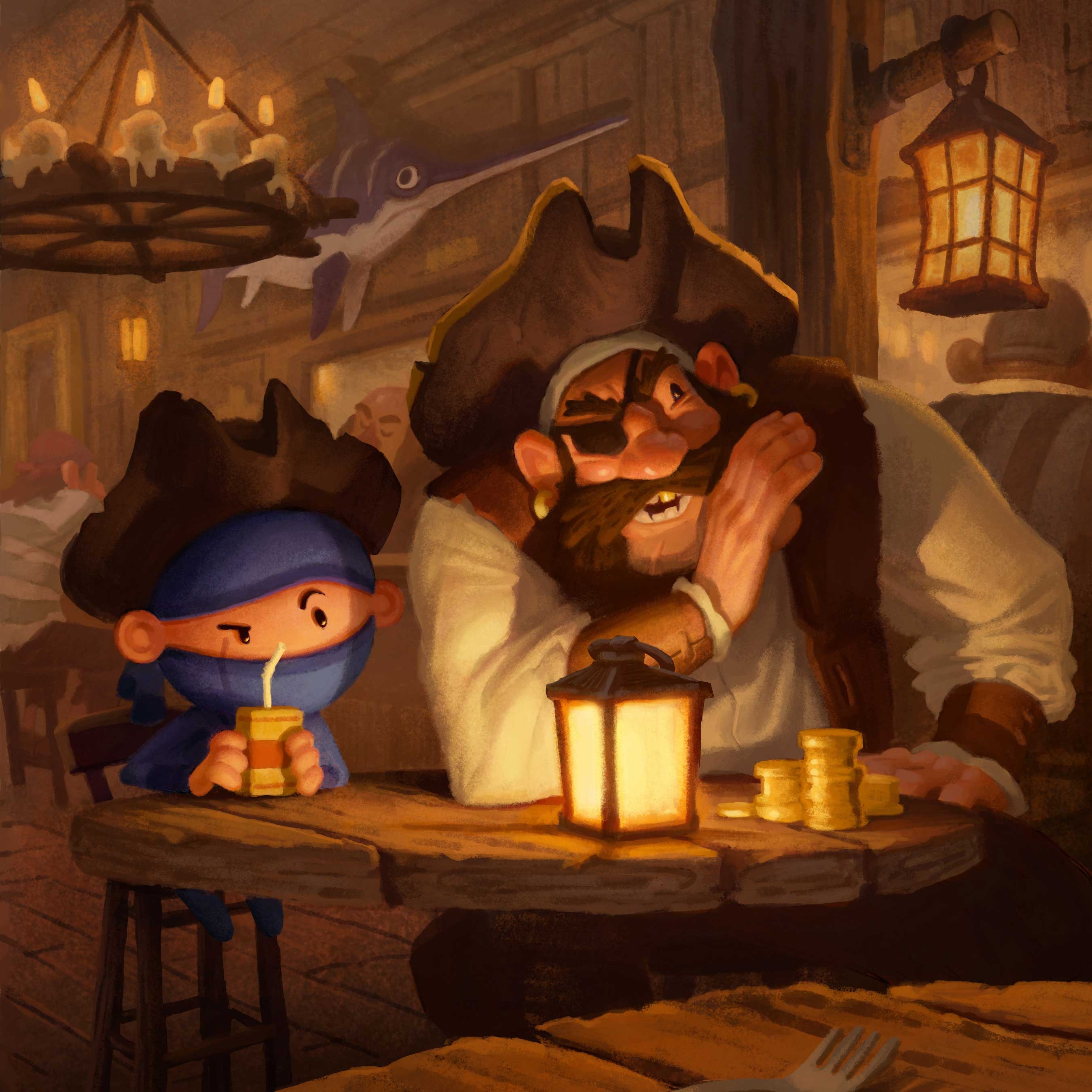
Meet The Illustrator: Forrest Dickison

Name: Forrest Dickison
 
Describe your illustration style in ten words or less.
Bill Peet meets NC Wyeth meets Looney Tunes.

What items are an essential part of your creative space?
My library! The more books the better.

Do you have a favourite artistic medium?
I love the old-school earthiness of pencils and gouache, the versatility of a Wacom, and the buttery flow of oil paint.

Name three artists whose work inspires you.
Herge, Georges Beuville, and Edgar Payne.

Which artistic period would you most like to visit and why?
I'd love to visit the early days of Disney when the Nine Old Men were inventing the artform of animation as we know it today. Watching them reshape the collective artistic imagination of Planet Earth would be something else. This would also be a convenient time to swing by Edgar Payne's studio and talk colour theory.


Who or what inspired you to become an illustrator?
I grew up reading Tintin, Asterix, and Calvin and Hobbes. I was fascinated by those worlds and characters that came alive through lines and shapes. I've been imitating ever since.


Can you share a photo of your creative work space or part of the area where you work most often? Talk us through it.
My current studio is on the second story of my house. Just out of frame to my left is a window that overlooks the backyard. When I need a break from the art, I can watch my girls playing, plants growing, and chickens chickening. It's all gloriously ordinary. The corkboard above my desk is filled with scribbles and notes from various projects currently under construction. The drawing of Jafar above my head is by Andreas Deja. It was an impulse buy at CTNX a number of years ago and is the closest it's ever been to being framed and hung on the wall. Maybe next year. My easel and overflowing bookshelves are set up behind the camera. All in all, it's a great place for picture making.


What is your favourite part of the illustration process?
I love the earliest stages of the process - the part that consists of venturing into the vast, unknown world of a blank piece of paper, armed with nothing but a pencil and my imagination. The more I illustrate, the more I feel like an explorer or an archeologist who's digging around in the dirt for things that have existed long before I was even born. Finding them is thrilling. Sprucing them up for presentation is still fun, but a different kind of fun.

  
What advice would you give to an aspiring illustrator?
Dead artists are the best teachers. It's easy for students to mistake artistic trends for fundamentals. Copying illustrators and artists whose work has stood the test of time is the fastest way to build good habits.


Forrest Dickison is the award-winning illustrator of Hello Ninja, which was recently made into a Netflix original series. When he isn’t illustrating books or working on animated shows, Forrest can be found in the great outdoors, chasing the light (and clouds) with a brush and some paint.

For more information, please visit Forrest's website.


from Kids' Book Review https://ift.tt/a2lrTt3

Wednesday, 23 November 2022

Review: Need a House? Call Ms Mouse!

Need a House? Call Ms Mouse! That’s both the name of this fabulous STEM-themed picture book, and the message of its animal characters.

Ms Mouse is Henrietta, a talented architect whose imagination and creativity are put to excellent use. This book is like a portfolio of Henrietta's work.

There are many animals who want the home of their dreams, so Henrietta listens carefully to their brief, then designs a house to meet them. 

From Lizard’s desire for a beach house to lounge in the sun, to Owl's tower with an observatory to gaze to the stars. Caterpillar has a snug home packed with features that allow him to store plenty of food. There are also homes for Squirrel, Spider, Trout, and others.

Whether simple or grand, Henrietta will find a solution, and she might just inspire future architects and designers to do the same.

George Mendoza's text helps readers understand a little about design and building, and to learn about the animals' needs and environments.

Doris Susan Smith's illustrations are a brilliant visualisation of Henrietta's designs. They're in pen and ink and watercolour, and take a cross-section approach to depicting the various houses. It lets you explore the nooks and crannies of the house design.

Need a House? Call Ms Mouse! is a reprint of the original, first published in 1981, and a favourite childhood memory for those who read it in the '80s. I hadn't heard of the book before, which is surprising given my particular interests, but it appealed to me straight away and I'm happy to have been able to enjoy it.

It's great to know Allen & Unwin set out to find the copyright holder so this book could be republished at last, much to the excitement of those who have long awaited it, and for all the new readers of today.

Detail and creativity abound in Need a House? Call Ms Mouse! I highly recommend you find a copy and share it with your family, and keep it for future readers to enjoy as well.

Title: Need a House? Call Ms Mouse!
Author: George Mendoza
Illustrator: Doris Susan Smith
Publisher: Allen and Unwin, $24.99
Publication Date: 1 November 2022
Format: Hardcover
ISBN: 9781761066016
For ages:  3 - 7 
Type: Picture Book


from Kids' Book Review https://ift.tt/TlEzMPI

Monday, 21 November 2022

10 Quirky Questions with author Deborah Abela

1. What's your hidden talent?
I am a brown belt in Judo. So watch out everyone... I’m also very short, so that may not be as scary as it sounds.

2. Who is your favourite literary villain and why?
I love Count Olaf from A Series of Unfortunate Events. He’s so mean and wicked and has no idea of how unfunny he really is, which of course makes him hilarious.

3. You're hosting a literary dinner party, which five authors would you invite? (alive or dead)
Kate DiCamillo, David Walliams, Julia Donaldson, Jacqueline Wilson, Katrina Nannestad. I think that would be a fun party!

4. Which literary invention do you wish was real?
A Skymouse (Arlo from The Book of Wondrous Possibilities has one).

5. What are five words that describe your writing process?
Chaotic, messy, surprising, shambolic, wondrous.

6. Which are the five words you would like to be remembered by as a writer?
Imaginative, heartfelt, exciting, warm, brave.

7. Picture your favourite writing space. What are five objects you would find there?
A view, light, a fresh breeze, friends nearby when I need to play, and a huge pot of tea.

8. Grab the nearest book, open it to page 22 and look for the second word in the first sentence. Now, write a line that starts with that word. (Please include the name of the book!)
Bully on the Bus by Kathryn Apel. ‘Walk,’ she says, which I do because I know she’s angry and don’t want to do anything that’ll make it worse.

9. If you could ask one author one question, what would the question be and who would you ask?

Kate Di Camilo, can you hear the voices of your characters when you write, because they feel so real, as if they really do exist.

10. Which would you rather do: 'Never write another story or never read another book'?
What! What a terrible choice! I can’t choose. Don’t make me! Please! Reading makes me want to write and writing making me wants to read... it’s part of the same lovely circle.

After training as a teacher, Deborah Abela travelled to Africa where she was harassed by monkeys, caught in a desert sandstorm and thrown in jail... twice! She’s worked as a child wrangler and a rides operator at Luna Park, but her first real job was as writer/producer of a national children’s TV show at Network TEN. She has since become an internationally published and awarded author of 28 books, including her cranky climate change trilogy, Grimsdon, New City and Final Storm. Her family’s survival in WWII and migration to Australia inspired Teresa A New Australian. The Stupendously Spectacular Spelling Bee and The Most Marvellous Spelling Bee Mystery were inspired by her fantabulous Grade 4 teacher, Ms Gray. She’s also written picture books: Wolfie, An Unlikely Hero and the 2021 CBCA Notable, Bear in Space. The Book of Wondrous Possibilities is her love letter to books, booksellers, librarians and readers. Deb’s won awards for her work but mostly hopes to be as brave as her characters. She’s a proud ambassador for the charities, Room to Read and Books in Homes. For more information, see www.deborahabela.com

from Kids' Book Review https://ift.tt/zyvdtf1

Guest Post: Kylie Mort on The Inspiration Behind Big Emotions

Review: The Edge Of Limits

Tuesday, 15 November 2022

12 Curly Questions with author Mike Lucas

1. Tell us something hardly anyone knows about you.
I am a very long-time member of the Curly Wurly Club. And I have a card to prove it.

2. What is your nickname?
I’ve never had one, but I’m open to suggestions of a complimentary nature.

3. What is your greatest fear?
Somebody setting fire to my vinyl collection.

4. Describe your writing style in 10 words.
I make it up as I go along. That’s it. (I’m counting that’s as one word)

5. Tell us five positive words that describe you as a writer.
Proud, persevering, supported, fortunate, improving.

6. What book character would you be, and why?
Winnie-the-Pooh because everybody loves him and his world is so perfect.

7. If you could time travel, what year would you go to and why?
Probably 1865 to prevent my great-great-great grandfather from blowing up his house and killing nine people. But then again, I may wipe out my own existence by interfering...

8. What would your 10-year-old self say to you now?
Why didn’t you take writing more seriously from a younger age? You always knew you could do it.

9. Who is your greatest influence?
It has to be Stephen King. I’ve been reading his books since I was 11.

10. What/who made you start writing?
Roger Waters of Pink Floyd, mixed with teenage angst.

11. What is your favourite word and why?
Discombobulation. It’s a fabulous word that makes you feel exactly what it means.

12. If you could only read one book for the rest of your life, what would it be?
The Neverending Story (I’m being clever here!)

Originally from the UK, Mike moved to South Australia in 2010. He is the author of several picture books and his first YA novel, What We All Saw, was published this year with Penguin Australia. Mike also owns a bookshop in Adelaide and works full time as an engineer. For more information, see www.mikelucas.com.au.


from Kids' Book Review https://ift.tt/L0EW5eo

Monday, 14 November 2022

Guest Post: Morris Gleitzman on His Secret Friends and How They Inspire Him

We spoke to former Australian Children's Laureate, Morris Gleitzman to learn about inspiration, humour and his new book, Digging Up Dad.

Where did you get the ideas for the stories in Digging Up Dad?
They just sort of slowly came to me, thanks to a creative technique that has served me well over the years. The one where you make slow circular meditative movements with a sponge in a sink full of dirty dishes and let your mind wander.

While I was waiting for the burnt bits to soften, I found myself thinking about how everyone’s problems seem to be a bit bigger these days. And more complicated. And harder to fix. And when I say everyone, I'm including the planet that lets us park our cars on it.

I also found myself thinking how a lot of us grown-ups aren't feeling as confident as we used to about making things better. And how young people are probably noticing this. And perhaps wondering if they might be able to do a bit of making things better themselves. Not just in their own lives, but also in the lives of their families, pets, teachers, neighbours, local shopkeepers, members of parliament etc.

Which got me hoping I could meet a few kids like that in my imagination. And then, when they found they'd got a mate with a laptop and a big sink, they might feel hopeful enough themselves to have a crack at it. And along the way, even if they hadn't planned it, inspire us grown-ups to be our best selves too. In somewhere between three and seven thousand words with not too many adverbs.


The stories in Digging Up Dad have certainly made me feel more hopeful, which is why I put the word in the extra bit of the title. I also did it to remind young readers that if they come across a grown-up who’s not having a very hopeful day, sharing stories with them might just help.

How do you incorporate humour into serious subjects?
Stories are always about characters struggling with problems. So as their author you want to equip them with as many believable personal strengths and qualities as possible. Especially when the characters are young.

Empathy, bravery, optimism, resilience, creative thinking, the capacity for loyal and loving friendships, the ability to stay up much later than adults think they can - you can make your own list. If young characters can start out with at least some of these, the problem-solving journey helps them develop even more.

It's never easy for young characters - bombarded with new experiences, out of their depth, desperate sometimes - so they often use what they've got in unconventional and not always parentally-permitted ways. And this is where humour often comes in.

But, an important note. No matter how much humour there is on the page, every story is a serious story. Even if at first glance it doesn't seem like it. Even if you don't stop chuckling from start to finish. And that includes the stories in Digging Up Dad.

I would like to point out, though, that no swimming-pool swamp weed, flared stretch leotards, federal politicians, nervous speed bumps, giant sloths, lumps of toe fluff, rugby-playing wheelie bins, real estate agents' teeth, scary removalist trucks, very naughty year six dance and drama groups or bouncy bouncy settees were hurt in the writing of this book.

What inspired you to start writing?
My secret friends. As a young kid, like most young kids, I spent countless hours with secret friends in my imagination having unsupervised adventures. In year five, when we had to start writing stories, I realised I already had everything I needed. And I still do. Thanks, secret friends. Sorry about you not being so secret anymore. (Actually, they don't mind. I know they don't because their publicists tell me.)

How do you know what types of stories people want to read?
It's actually quite easy. Because there's only one type of story. Character, problem, laughter, tears, physical journey to try to solve or survive the problem, emotional journey so we can all share the experience. The rest is packaging. And while packaging can be fun, every teacher knows you can't keep a class transfixed and facing the front for an hour just with packaging.

If you could choose just one, what is the main message you'd want young readers to take away from Digging Up Dad?
Sorry to be unhelpful, but there aren't any messages in Digging Up Dad. Stories aren't allowed to have messages. It's illegal under the Federal Telecommunications Licencing Act. Stories are only allowed to have richly immersive visual and emotional components that remain inert until they enter the infinite realm of the reader's imagination and there come gloriously alive. Sorry.


Morris Gleitzman grew up in England and came to Australia when he was sixteen. After university he worked for ten years as a screenwriter. Then he had a wonderful experience. He wrote a novel for young people. Now, after 43 books, he’s one of Australia’s most popular authors. He was appointed the Australian Children’s Laureate for 2018–2019.

Reproduced with permission by Puffin Books. Keep an eye out for our KBR review of Digging Up Dad by Elizabeth Vercoe - coming this Wednesday!


from Kids' Book Review https://ift.tt/o8QUm0s